Semmelweis Talk 2022

This was our fourth Semmelweis Talk: The influence of COVID-19 on MDRO´s & infection control

This was our fourth Semmelweis Talk: The influence of COVID-19 on MDRO´s & infection control


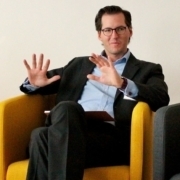
This time we were privileged to welcome Andreas Voss, Professor and Chair of the department of clinical microbiology and infection control at the University Medical Center in Groningen, Emese Szilagyi, medical director at Péterfy Hospital in Budapest, and last but not least Jakub Kozák, CEO and co-founder of Datlowe.


The Influence of COVID-19 on MDRO’s & Infection Control

Andreas Voss gave us a very detailed overview of the changes caused by Covid-19, focusing on infection and prevention control. IPC suddenly had the attention of almost everyone. Another change was that public health services basically swallowed up infection control capacity.

Of course, this also raised the question  whether the pandemic has also facilitated positive changes. The answer is yes and no.

The protection of the healthcare workers themselves became an important motivator to follow IPC guidelines and when scarcity hit healthcare, all rules and habits changed immediately.

But new opportunities have also emerged: The number of MDRO´s dropped drastically with the beginning of the pandemic and there was hardly any influenza activity in 2021 because of the Covid-19 measures.


IPC learnings from the field

Emese Szilagyi gave us a lively insight into her IPC learnings and experiences from the field. Infection control was extremely overloaded at peak times and it was almost impossible to do a good job. The lack of well-trained healthcare workers and contamination from equipment further complicated the situation.

Luckily, the situation has returned to normal in the meantime, but there is still a shortage of staff. To get more people interested in healthcare jobs, Szilagyi proposes to start advertising in schools already.


HAIDI –AI-based solution for the automation of surveillance of healthcare-associated infections

Jakub Kozák presented his new AI-based solution for automating the surveillance of healthcare-associated infections named HAIDI, which will help hospitals to leverage the power of data hidden in their information systems.

HAIDI detects all major types of HAIs and works for all departments. The software is available in Czech, Slovak, German and English. Up to now HAIDI has been successfully deployed in 18 Hospitals in the Czech Republic, Slovakia and Austria and takes care of 8.500 beds in total.

But how does it work?

HAIDI collects all available sources of information, such as X-ray descriptions or care documents, analyses them and finally converts them into an automated list of potential HAIs.

The AI-based solution has the great advantage of being extremely time saving as it will reduce the time spent on HAI case detection from about 40 hours to 20 hours per month.


In addition to the individual presentations, many exciting questions were answered and discussed. If you want to find outmore, have a look at the detailed video about the fourth Semmelweis Talk!


Our special thanks go above all to our contributors:


  • Andreas Voss
  • Emese Szilagyi
  • Jakub Kozák
Semmelweis Talk 2 - 2022

Review: Our 2nd Semmelweis Talk about HHEA

This was our second Semmelweis Talk: Hand Hygiene Excellence Award – A journey worth taking
“Learning from the Best” has been the motto for the 2nd Semmelweis Talk that took place on 28th of June 2022.

Representatives from Villach (Austria), Ms Elke Schindler, and Pula (Croatia), Ms Martina Močenić, shared insights into their journey as award winners.

HHEA Global Project Manager Thomas-Jörg Henning presented an overview of the award application process.

What does it take to participate? What are the hurdles and how can they be overcome? And if you are not ready yet: Where and from whom can you get support?

Elke Schindler gave us an overview of the practical tools in her facility. From self-made films that are visible on the house channel, to the hand hygiene scanner to the cooperation with the  Red Noses Clown doctors – Hand  hygiene is visible in the Hospital Villach through many impulses.

Martina Močenić, who is part of the infection control team, talked about the struggle of moving to a new hospital during the Covid 19 pandemic. She also gave insights into the connection between hand hygiene and gloves and how this impacted the monitoring of the data.

In the second SemmelweisTalk, various technical tools and different prevention programs were presented, some of them are being used by the award winners.

In the following discussion, our speakers talked about their passion, the team culture and the dichotomy between the joy and the obligation of setting a hand hygiene program.

Focusing on how important a positive role model can be in this context, Schindler compared the issue to parents and children.

Henning explained that some hospitals were among the finalists, highlighting the advantages they had from participating, even though they did not win, as well as why it makes sense to participate again in the following years.

With the help of the honest self-assessment system when registering for the award, it becomes possible to assess the status quo of a hospital in terms of hand hygiene and to initiate improvements with the support of experts.

Močenić elaborated on how leadership and changing processes are intertwined as well as how much teamwork and effort is involved in taking a team from hand washing to hand scrubbing.

It doesn’t take a big budget to participate in the HHEA – all you need is passion, good communication, a dedicated team and creative solutions. So, are you ready for the challenge?

If you are not quite sure yet, the answers to these questions and many other interesting statements can be found in our video about the second Semmelweis Talk.

Our special thanks go above all to our contributors:

– Bernhard Küenburg (President of the Semmelweis)

– Elke Schindler (Medical Director of Hospital Villach Austria)

– Martina Močenić (Pula Hospital Croatia)

– Thomas-Jörg Hennig (B.Braun)

Join our third Semmelweis Talk and learn more about Surveillance of Healthcare – Associated Infections ( HAI)  as a monitoring tool to promote Infection prevention and control ( IPC)

We are already preparing for the third Semmelweis Talk and would be happy if you also participate and register here.

Semmelweis Talk 1 - 2022

Review: Our 1st Semmelweis Talk about Humor

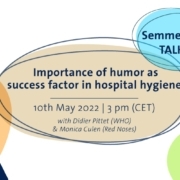
This was our first Semmelweis Talk: Humor as success factor.

We are very proud and grateful for the great popularity and the many participants of our first Semmelweistalk on 10th of May 2022.

Our regular talks are intended to connect and exchange employees in the medical sector and all interested parties. Together with experts, we would like to draw attention to the essential topic of hand hygiene in hospitals and present strategies for implementing it even better. We want to support our community with practical examples and create awareness.

Our special thanks go above all to our contributors:

– Bernhard Küenburg (President of the Semmelweis)

– Johannes Culen (Secretary General of the Semmelweis Foundation)

– Prof. Didier Pittet (WHO & Honorary President of the Semmelweis Foundation)

– Monica Culen (Executive Director and Founder of RED NOSES Clowndoctors International)

Bernhard Küenberg personally introduced our new Secretary General, Johannes Culen, and guided the talk.

Prof Didier Pittet gave many examples and possibilities to spread more humour in the hospital sector and not to lose it. It is a matter of concern to him to make the important and serious topic of hand hygiene present and to recall it again and again through different humorous games or cartoons. Through his practical examples, Prof. Pittet shows how to introduce his team to the topic in a humorous way, how to train them, how to optimize processes and how to implement them. Whether team challenges or other rituals that are part of the team culture and support hand hygiene are welcome, especially if they are spiced with a portion of humour.

Monica Culen took us on a journey from the very beginning of RED NOSES Clowndoctors to the worldwide association that is active in so many countries around the world. They bring laughter and humour to what can be a scary environment for many patients, especially children. Dressed up, with red noses, in clown costumes and numerous tricks in their luggage, a small team of artists travels through the hospitals and makes the young and older patients forget their pain and worries for this time and usually for longer.

The Semmelweis talk was underpinned by numerous sample videos and our specially composed Semmelweis song has been performed by the Red Noses Clowndoctors on Hand Hygiene Day.

In the discussion that followed, the aspects between music, humour, endorphins and chemical reactions in the body and their connections were highlighted. The topics of burnout and shortage of skilled workers were also discussed and everyone agreed: with humour and a good mood, many tasks are easier to manage and prevent many things such as mental illness.

Afterwards, questions from the participants were still answered, including the question: „Should humour be part of the training of hospital staff to give you a tool in communication and thus a way to deal with stress efficiently?“ The answer to these questions and how to implement the pudding game and what it has to do with hand hygiene can be found in our video of the first Semmelweis Talk.

Join our second Semmelweis Talk and learn more about winning the Hand Hygiene Excellence Award!

We are already preparing for the second Semmelweis Talk and would be happy if you also participate and register here.
[/av_textblock]

Rote Nasen

Semmelweis and RED NOSES Cooperation

Semmelweis & RED NOESES Cooperation

This year the International Day of Hand Hygiene, on May 5th was a very special one for the Semmelweis Foundation. Together with the RED NOSES Clowndoctors, we worked for months to prepare a campaign that really made our hearts melt:

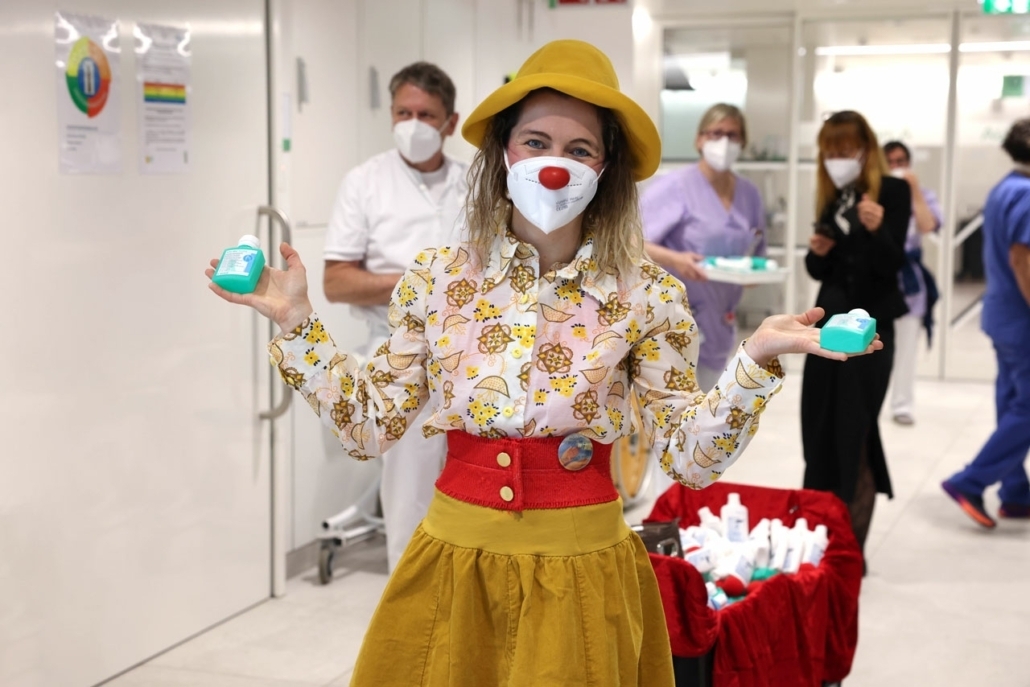
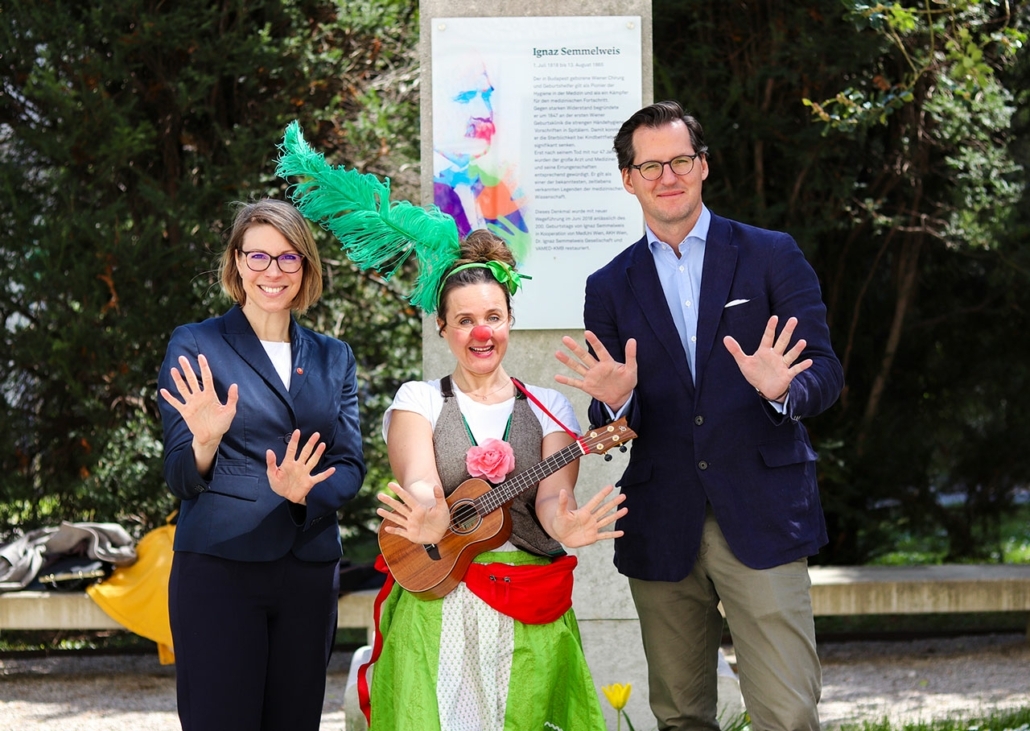
With a song composed especially for this occasion in their luggage, the popular humor experts from RED NOSES visited numerous hospitals throughout Austria to draw attention to the importance of proper hand disinfection.

A catchy tune for hand disinfection

Especially in the pandemic period – but also beyond – alcohol-based hand disinfection is an essential and effective measure for the protection of all, not only for hospital staff but also for visitors. In order to make the walk to the disinfectant dispenser and the correct technique as easy to remember – as a catchy tune – that recurs intuitively, the RED NOSES Clowndoctors gave a vivid vocal instruction for correctly executed hand hygiene with the song “Better, better hand hygiene” and accompanying performance.

Curious if you can’t get it out of your head as well? Listen here and see for yourself:
[/av_textblock]

From Carinthia to Vienna

From the LKH Villach to the St. Josef Spital in Vienna, the professionals in “humorous health intervention” knew exactly how to reach their audience individually and created unforgettable moments. See for yourself in our gallery!  

Hands and humor: the perfect match!

Ivana Bacanovic, Managing Director of RED NOSES Clowndoctors explained why she didn’t even think twice when she was asked by the Semmelweis Foundation: “The well-being and health of the people we visit always have top priority for RED NOSES. Therefore, it is a matter of course to support the Semmelweis Foundation in its efforts around the topic of hospital hygiene. Thoroughly disinfecting one’s hands and only then going to the hospital is a constant routine for our clowns and staff. We are happy to do our part to remind everyone in the hospital environment of the need for proper hand hygiene. We firmly believe that a positive, fun experience is the best teacher and shows people how easily, and perhaps intuitively later, they can save lives that way themselves.”

We may introduce: Our Secretary General Johannes Culen

When we founded the Semmelweis Foundation in 2012 out of a private commitment, who would have thought that it would one day become a recognized association, with partners and collaborations throughout the entire CEE region. Much has already happened since our foundation, but further efforts are still needed to achieve our ambitious goals in the future. On our journey to help to make the world a little better a milestone in our history has now been set: The Semmelweis Foundation is happy to welcome our new Secretary General: Johannes Culen – a real expert in terms of building up an association and representing interests to decision makers and stakeholders!

Culen is 41 years old, born in Vienna and brings to us a large international network and many years of experience in representing interests and association building. He studied business administration in Vienna and completed internships in New York and Sydney before starting his professional career with the trainee program of the Federation of Austrian Industries. During this time, he gained valuable experience in social and European policy in Brussels. After working as a business development manager in a well-known industrial company for several years, he was finally responsible for projects in both the Asian and US markets. In his last position as Managing Director, the 41-year-old was responsible for the successful development and establishment of the umbrella association of Austrian real estate project developers (VÖPE).

At the side of President Bernhard Küenburg, he will now put his expertise at the service of our association in order to lobby for our issues with decision-makers in politics and responsible institutions. Another goal of his is also to establish the Semmelweis Foundation as a competence center and knowledge platform in Austria as well as in the entire CEE region.

We asked Culen how he went from building an association for the interests of real estate to hand hygiene, and what his new job means to him:

Why did you decide to work at the Semmelweis Foundation?

Health and the issues associated with it have always played an important role in my life. There are many doctors in my family, my sister is a clinical psychologist for example and my mother has been highly involved in national and international health care for years.

For years I worked for internationally active business companies and in economy but since the COVID pandemic began, my priorities have changed. The health and safety of my own family took priority over material things, and that has remained the case for me. The sustainability of my own actions for our society has become a new motivator for my professional career, which is why I decided to put my expertise at the service of the Semmelweis Foundation. 

What do you particularly like about your work?

One thing I have always enjoyed is developing cooperative strategies with different stakeholders, forging alliances, planning actions, being creative and convincing people around of the importance of our issues.

Thanks to my training in the trainee program of the Federation of Austrian Industries, my experience at an international interest group in Brussels and most recently as the managing director of an umbrella organization in Austria, I can bring all my previous experience to the table.

What are your goals for the Semmelweis Foundation?

My goal is to positively charge the topic of hygiene. I also see my task in the medium term as giving the Semmelweis Foundation a new profile in order to establish it as a competence center and knowledge platform. Not only for doctors or hygiene specialists, but also for start-ups in the hygiene sector. This is where people should be able to network with each other, and this is also where the gateway to the CEE region should be opened wide to exchange ideas and learn from each other. 

One thing that is particularly close to my heart is that in the future it should be possible to address the topic of hygiene in the healthcare sector without taboos.

More so I want to increase transparency so that we can take a major step forward, especially in the prevention of infections. We see an urgent need to catch up here with Scandinavian countries, which are leaders in the field of prevention and monitoring of nosocomial infections and also hand hygiene compliance.

Semmelweis Reflex

The Semmelweis Reflex: When beliefs trump facts

The knee-jerk reaction to reject new evidence because it contradicts established beliefs is named after Dr. Ignaz Semmelweis (1818-1865). The physician discovered a visionary way to save countless lives – only to have his own life destroyed when his theories were ridiculed. Imagine the Viennese general hospital in the 1840s: The biggest medical institution in […]